Thursday, April 30, 2020

Which island is this river on?


Although not the longest of the trio of rivers situated on the Isle of Wight, the River Medina is considered the island's main river. Medina is the Latinised form of its Saxon name 'Medene' meaning 'middle river', as it nearly splits the Isle of Wight in half, flowing 12 miles northwards through the centre of the island. On its journey, the river passes through the capital Newport towards the twin towns of Cowes and East Cowes (situated on either side of the Medina and connected by a chain ferry), and the Solent, the strait that separates the Isle of Wight from the mainland of England. The river is a renowned yachting location, with Cowes home to one of the oldest and biggest sailing regattas in the world.

Source: Bing 

Thursday, April 9, 2020

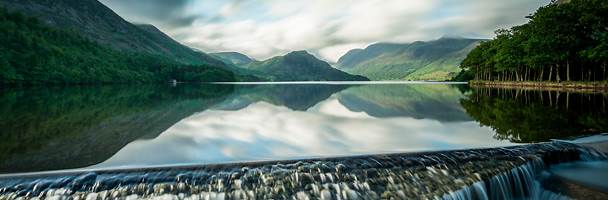
Which waterfall feeds this lake?

crummock water

Natural lakes reflect surrounding mountains, fells and forests here in Cumbria’s Lake District, a UNESCO World Heritage site whose picturesque landscape has inspired writers from William Wordsworth to Beatrix Potter. Crummock Water and its neighbours, Buttermere and Loweswater sit in one of the prettiest parts of the Northern Lakes, the Vale of Lorton. Their chilly, clear waters make them an ideal home for the Arctic char as well as brown trout, sea trout and salmon. Also look out for Lakeland sheep wandering onto the roads and for red squirrels around Loweswater.

The Lake District gets busy during the summer but Crummock Water is considered one of the quieter lakes. It is a favourite with swimmers however and going for a dip is a popular way to cool off after a walk around its shores. The lake itself is 2.5 miles long, about half-a-mile wide and, in parts, more than 140 feet deep. It’s fed by streams, including one from Scale Force, the Lake District’s tallest single-drop waterfall, at 170 feet high.

Source: Bing 


Wednesday, April 1, 2020

Dare you cross?

Carrick-a-Rede rope bridge

A head for heights is definitely required here at one of Northern Ireland’s most eye-catching attractions, the Carrick-a-Rede rope bridge, off the coast of County Antrim. This 20m (66ft) long bridge spans the chasm between the mainland and Carrick-a-Rede Island, which takes its name from the Irish ‘Carraig a’ Ráid’ or ‘rock of the casting’. No-one lives in the restored fisherman’s cottage on the island now but at one time it was the place to go to catch migrating salmon, and it is fishermen who built the first bridge here in 1755. If you think today’s bridge looks daunting, you should’ve seen some of its earlier incarnations. As late as the 1970s there was only one handrail, not to mention large gaps between the slats.

As numbers of salmon dipped, commercial fishing came to an end in 2002 and the bridge became a tourist attraction for those willing to test their nerve, swaying 100ft above the Atlantic. Game of Thrones fans may also recognise the area from the show’s scenes featuring Storm’s End, the seat of House Baratheon in the series.

Source: Bing


Monday, March 23, 2020

When was the first spacewalk?

extravehicular activity spacewalk

If this photo from 200-plus miles above Earth makes you dizzy, imagine how it felt to be Alexei Leonov on 18 March, 1965. The Soviet cosmonaut achieved the first-ever extravehicular activity (EVA - but let’s just call it a spacewalk). He spent about 20 minutes outside the orbiting Voskhod 2 capsule. It was the ultimate risk: no one knew just what could happen to a human body in the vacuum of space. Near heatstroke, drenched with sweat and with his suit dangerously inflating, Leonov barely made it back inside the airlock.

Of course, the art of EVA has been refined since then, and that vertigo-inducing panorama is now the view from the office for those working on the International Space Station. The astronaut you see here isn't Leonov but Nasa's Robert Curbeam, replacing a faulty component. On this mission in 2006, Curbeam set a record with four EVAs in one spaceflight, spending over 24 hours outside the vehicle. Since the ISS's first spacewalk in 1998, more than 227 have been performed by a large cast of astronauts — including a milestone excursion in 2019, which employed the first all-female crew.

Source: Bing


What is a tarn?

Loughrigg Tarn

As the sun rises on Loughrigg Tarn, in the heart of the Lake District, you can see why the poet William Wordsworth likened it to Italy’s Lake Nemi, describing it as “Diana’s looking glass … round, clear and bright as Heaven”. This small, nearly circular tarn just north of Windermere reflects surrounding fells in its clear waters which, in the summer, are decorated with water lillies. Of the 16 lakes in the Lake District, only one is actually called a lake – that’s Bassenthwaite Lake. All the others are “meres” or “waters”. And then there are numerous smaller tarns like this one - "tarn" is derived from the Old Norse word for pool.

While Loughrigg Tarn, nestled beneath Loughrigg Fell near the popular tourist destinations of Grasmere and Ambleside, is considered one of the Lakes’ hidden treasures, it’s pretty accessible as it is one of the lowest tarns in the national park. It’s also (relatively) warm and popular with wild swimmers. Offering great views, including of the rugged slopes and summits of the Langdale Pikes, it won’t disappoint visitors. And if it looks familiar, it might be because it also featured in a film about another famous writer inspired by the Lakes – the Beatrix Potter biopic Miss Potter.

Source: Bing

Thursday, March 12, 2020

What's the Green Mountain state?

Frost coats Vermon

Welcome to the picturesque US state of Vermont, known for its snowy mountains, lakes and forests. This frosty aerial shot captures Otter Creek, which has been an important waterway here since people first settled in the area about 10,000 years ago. A trade route for the indigenous Abenaki, Algonquin and Iroquois nations, it remained a vital part of the economy for European settlers throughout the 19th century.

Otter Creek winds through some of the Green Mountain state's most scenic towns before emptying into Lake Champlain. It is also the water source for more than one of Vermont’s many microbreweries. While this small state is well known for its maple syrup production, it also has the most beer brands per-head in the USA, with at least 60 breweries serving just over 600,000 people in the state. Cheers!

Source: Bing

Monday, March 2, 2020

Where is this stargazing spot?

Yorkshire Dales National Park

Light pollution can pose a problem for stargazers hoping to catch a glimpse of the Milky Way. But for those prepared to wrap up warm and head out on these dark nights, some of our national parks offer stellar views. Our homepage image was taken over the village of Malham, in the Yorkshire Dales National Park which, alongside the North York Moors National Park, offer some of the best night skies in England.

Now running their fifth annual Dark Skies Festival season, low light pollution and clear horizons offer visitors the chance to see up to 2,000 stars at a time, away from streetlights. In some spots, you can see our galaxy, the Milky Way, with the naked eye and across the parks you will get great views of the night sky. There are also ghost walks, night-time zip wires as well as moonlight canoeing and mountain biking for the more intrepid would-be astronomer while others may want to relax and enjoy the stars quietly, sipping on a hot chocolate.

Source: Bing